English
 العربية
 বাংলা
বাংলা Čeština
 Deutsch
 Dansk
Dansk Español
 Français
 Ελληνικά
 עברית
עברית हिन्दी
 Magyar
 Bahasa Indonesia
 Italiano
 日本語
日本語 한국어
한국어 Nederlands
 Bokmål
 Polski
 Português
 Русский
 Svenska
 Slovenský
 தமிழ்
தமிழ் ไทย
ไทย Filipino
 Türkçe
 Українська
 Tiếng Việt
 中文
中文
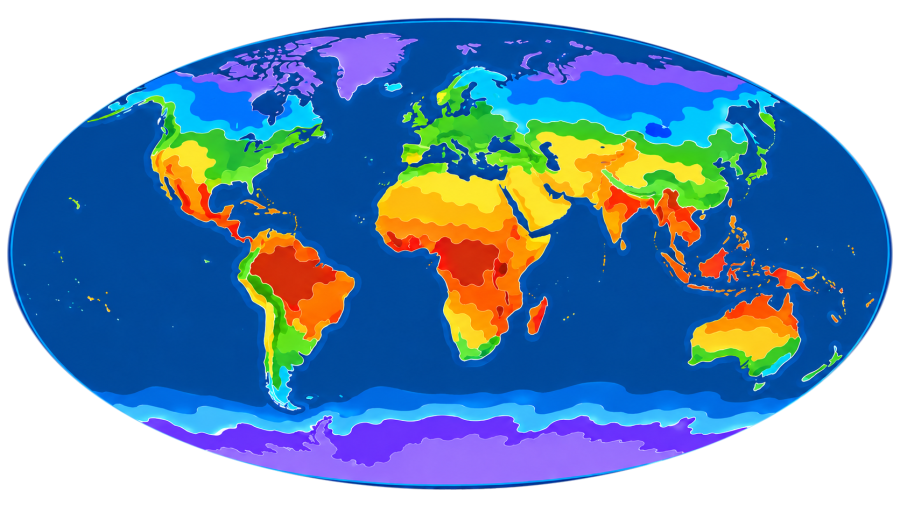
USDA Zone
-34 – -1
°C
-29.2 – 30.2
°F
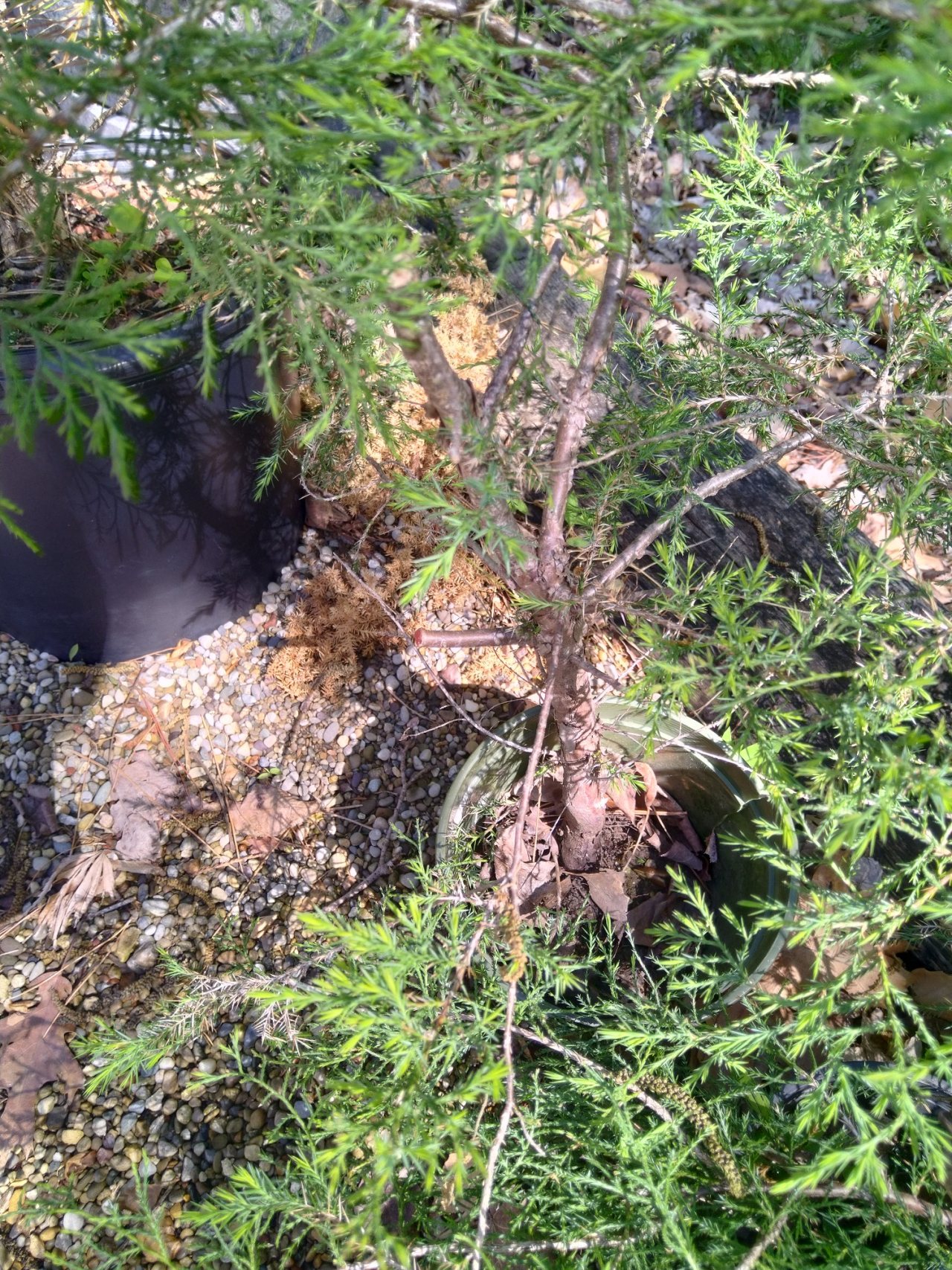
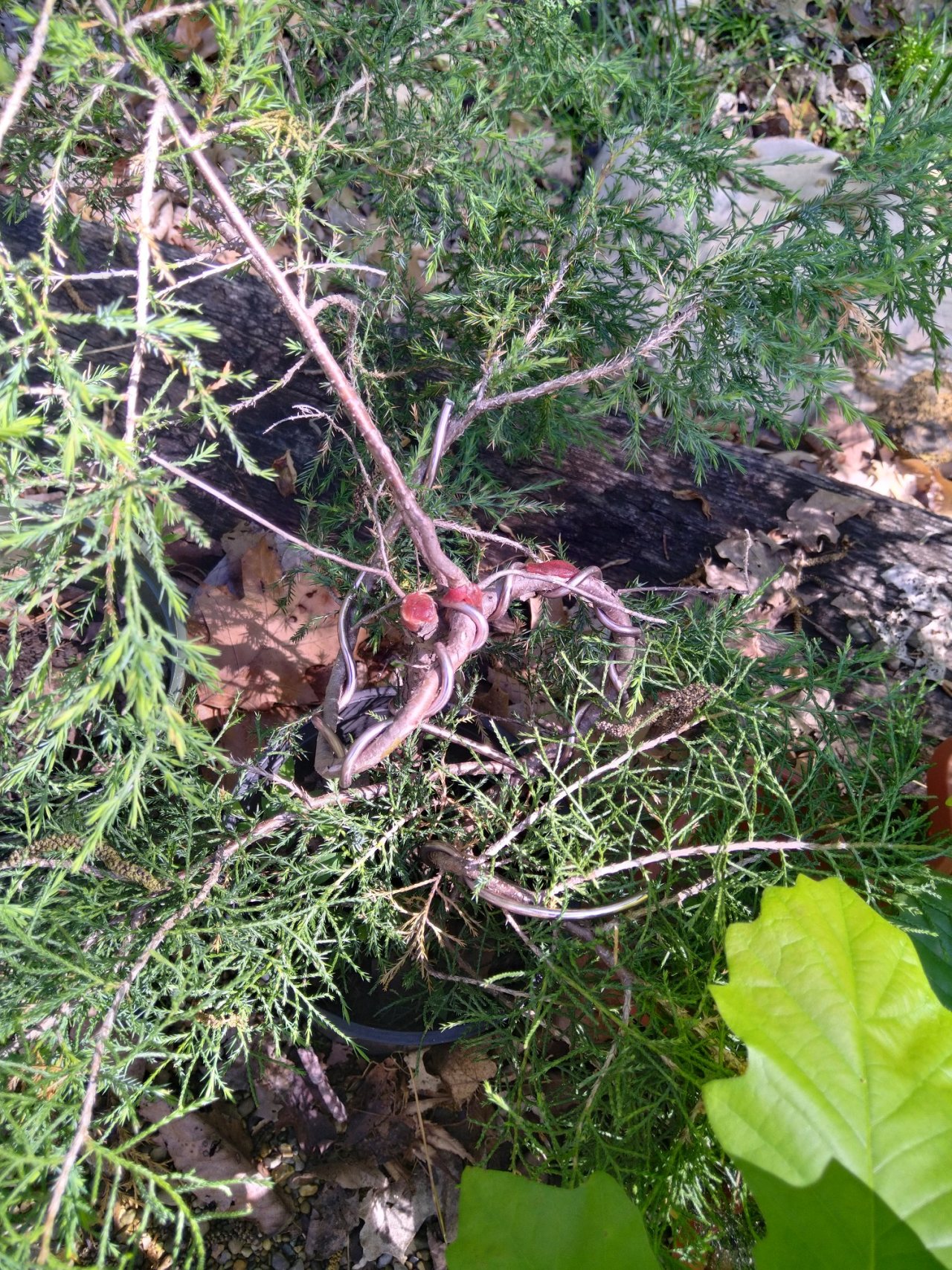
Eastern Red Cedar (Juniperus virginiana). Acquisition Date : 3/27/22
users403149
United States
Indiana
Dfa
Climate with hot and often humid summers, and cold winters. It experiences a strong temperature variation between seasons.

Undefined style
Undefined style
Undefined style - Why?
The owner has not yet defined a style for this bonsai or has not specified it.
Sometimes it is impossible to define a specific style for a bonsai due to various factors. The health of the tree, its natural structure, and its stage of development play a crucial role. For example, a young tree or one with structural defects, such as poorly positioned branches, may not be ready to adopt a particular style without compromising its growth. Furthermore, certain tree species have characteristics that do not lend themselves well to specific styles, such as branches that are too rigid for a cascade style. Finally, the art of bonsai is also a form of artistic expression, where each tree has its own unique aesthetic potential. A theoretical style may not correspond to the tree's natural essence, making it difficult or inappropriate to apply a rigid style. Thus, defining a style for a bonsai must take into account the balance between the tree's natural characteristics, environmental conditions, and the bonsaika's artistic vision.
Acquisition Date : 3/27/22 (4 years)
Source of acquisition : Back yard
Owner's note :
The Eastern redcedar (Juniperus virginiana) is a common, adaptable evergreen conifer native to the eastern U.S., known for its aromatic, reddish wood and value to wildlife, providing food and shelter for birds and mammals. It's a hardy, drought-tolerant tree that thrives in full sun and a wide range of soils, including slightly basic limestone/clay soil. it's technically a juniper, not a true cedar. The tree produces small, blue-black cones that look like berries, which are a key food source, and it is dioecious, meaning male and female plants are separate.
Two saplings put in escape root pots in ~fall 2022.
Leader chopped and wired February 2026.
Location : Along retaining wall
No history recorded for this bonsai
These services are offered free of charge by Appy Bonsai
Install the app for free